The First Lesson in Silence
I was a child when I first learned the rules of grief. Not the healthy kind of rules that protect and guide, but the quiet, unspoken rules that taught me what I was allowed to feel, what I was allowed to show, and what parts of my grief needed to stay hidden.
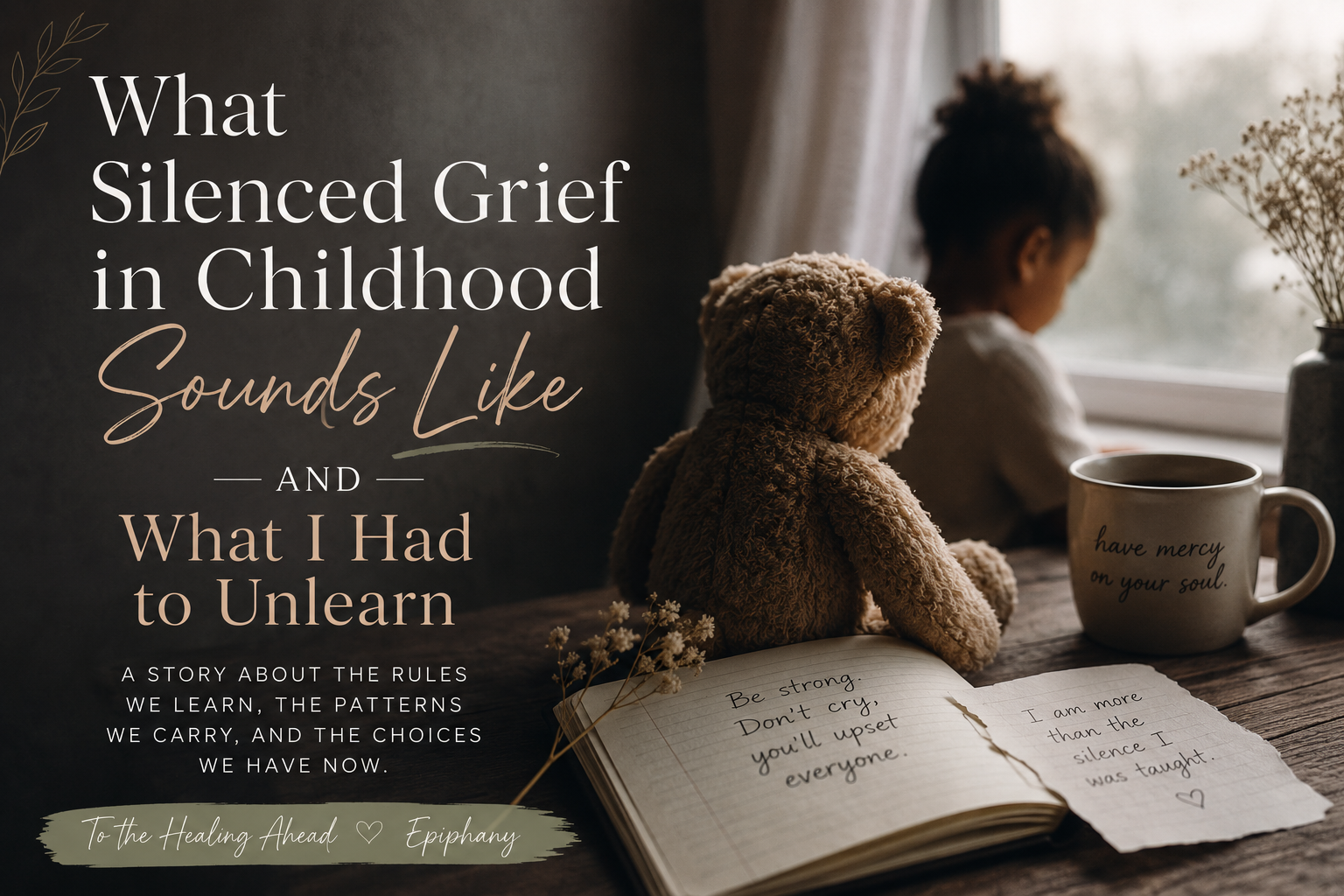
It was soon after I lost my parents. My entire world had changed, but life around me kept moving. I was still a child trying to understand what had happened, while also trying to understand what was expected of me now. I remember sitting in a room surrounded by family members, carrying emotions I didn’t have words for yet, when someone looked at me and said, “Be strong. Don’t cry, you’ll upset everyone.”
I don’t remember questioning those words. I was a child, and the adults around me were the people I looked to for direction. So I listened. If crying was going to upset everyone, I shouldn’t cry. If being strong meant holding myself together, then that was what I needed to do. And if talking about what happened made the people around me uncomfortable, maybe I wasn’t supposed to talk about it either.
I didn’t have language for what was happening then. I wasn’t thinking about grief, emotional suppression, or what those messages might mean years later. I was trying to survive the loss of my parents and understand how to exist in a world that suddenly felt completely different. But looking back now, I can see that those moments were teaching me something. My grief was there, but I was learning that there were places where it could be expressed and places where it needed to stay quiet. I was learning silence before I even understood that silence was something I was learning.
I don’t believe the people around me were intentionally trying to silence me. I think many of them were responding to grief the way they had been taught to respond to it. They had their own beliefs about strength, family, culture, and what you were supposed to do when someone died. Maybe some of them had learned to survive their own losses by staying quiet too. I can understand that now in a way I couldn’t as a child. But understanding where something came from doesn’t change the way it affected me. They may have been doing the best they could with what they knew, and I was still a grieving child learning that some parts of my pain were better kept to myself.
Over time, I became good at being strong in the way I thought strength was supposed to look. I learned how to stay quiet when I wanted to say something. I learned how to smile when explaining what I was really feeling seemed too difficult. I became aware of other people’s emotions and learned to pay attention to what they needed before thinking about what I needed. At the time, I didn’t see any of this as a problem. I thought I was adjusting. I thought I was surviving. And in many ways, I was. Those behaviors helped me get through a period of my life when I had very little control over what was happening around me.
The difficult part was that I grew up, but some of those rules grew up with me. For years, I didn’t connect the way I handled emotions as an adult with the child who had learned to stay quiet. I didn’t understand why vulnerability could feel uncomfortable even when I wanted closeness, why asking for help could feel harder than helping everyone else, or why I could be surrounded by people who cared about me and still keep the most painful parts of myself private. I didn’t think, this is something I learned after my parents died. I thought this was simply who I was.
Years later, I finally began finding language for some of what I had been living. Through my education in social work, my work in mental health, and honestly, just getting older and continuing to experience life, I began to understand that some of the things I had spent years believing were simply parts of my personality had much deeper roots. I learned how grief, trauma, emotional suppression, and early loss can shape the way we respond to emotions and relationships long after the original experience has passed. The education helped me understand the psychology behind it, but the truth is, I had lived it long before I ever had a name for it.
Once I had that language, I started looking at myself differently. I began noticing how often I could show up for other people while struggling to ask for help myself. I noticed how much easier it was to say, “I’m fine,” than to explain when I wasn’t. I began understanding why trusting people could sometimes feel complicated, even when they had given me no reason not to trust them. And I started recognizing how deeply loss had taught me to prepare for more loss. There were times I kept parts of myself protected because somewhere inside me, I still believed that letting someone get too close meant giving myself another person I could lose.
That understanding changed the way I looked at myself. Instead of immediately judging those parts of me, I started asking where they came from and what they had once helped me survive. Staying quiet had protected me when I didn’t know whether my emotions would be welcomed. Paying attention to everyone else’s needs had helped me maintain connection during a time when I had already lost so much. Keeping parts of myself protected had made sense when I had learned so young that people could be here one day and gone the next. I don’t believe I need to carry all of those behaviors in the same way anymore, but I also don’t look back at them with shame. They were ways I learned to survive before I had the understanding or choices I have today.
For me, unlearning silence didn’t begin with suddenly telling everyone everything I had been carrying. It started with paying attention to myself. I began noticing the moments when I automatically became quiet, when “I’m fine” came out before I had even considered whether I was actually fine, or when something hurt me and my first response was to convince myself it wasn’t a big deal. I started paying attention to how difficult it could feel to ask for support and how quickly I could shift my attention toward what everyone else needed instead. Before I could change any of those patterns, I had to become aware that I was still repeating them.
Once I started noticing those moments, I realized I had choices I didn’t have as a child. Sometimes that meant telling someone I trusted what I was actually feeling instead of automatically saying, “I’m fine.” Sometimes it meant allowing myself to cry without feeling like I needed to explain or apologize for it. Other times, it meant catching myself taking care of everyone else’s needs and stopping long enough to ask, What do I need right now? None of those choices felt natural at first. Silence had been familiar for so long that doing something different could feel uncomfortable. But I’ve learned that discomfort doesn’t always mean I’m doing something wrong. Sometimes it simply means I’m responding differently than I was taught.
I’ve also learned that unlearning silence doesn’t mean I have to share every part of myself with everyone. There are parts of my life and my grief that I choose to keep private, and I’ve learned there is a difference between privacy and silence. Privacy is a choice. I get to decide what I share, when I share it, and who has earned the right to hear certain parts of my story. Silence, for me, was different. Silence was believing I couldn’t speak even when I wanted to. It was worrying that my emotions would be too much, that my pain would make someone uncomfortable, or that I needed to carry something alone simply because I had always carried it that way. Learning that difference has allowed me to protect what is sacred to me without believing I have to hide who I am.
I wish I could say that understanding all of this means those old feelings never show up anymore, but that hasn’t been my experience. There are still moments when my first instinct is to keep something to myself. There are still times when asking for help feels harder than handling something alone, or when an old loss reminds me how quickly life can change. I don’t know that being human will ever allow me to completely escape fear, grief, uncertainty, or the ways our past can sometimes find us in the present. What has changed is what I believe those feelings say about me. I no longer see them as proof that I haven’t healed or that I haven’t grown. I know, deep in my soul, that they are feelings I experience. They are not who I am.
I think that’s one of the biggest things experience has taught me about healing. I used to think healing would eventually make me less affected by what happened to me. Now I understand it differently. For me, healing has been learning to recognize what I’m feeling without immediately becoming afraid of it. It’s understanding where some of my responses come from, having compassion for the version of me who learned them, and remembering that I have choices now. I may still become quiet sometimes. I may still grieve deeply. I may still have moments when old fears find their way back. The difference is that I don’t have to hand those feelings the power to decide who I am or how I live my life.
So if you learned somewhere along the way that being strong meant staying quiet, that your emotions were too much, or that keeping your pain to yourself was the safest way to make it through, I hope you don’t judge yourself too harshly for that. Those parts of you learned how to survive with the understanding and choices you had at the time. Maybe today you have more language. Maybe you have safer people around you. Maybe you’re beginning to recognize patterns you couldn’t see before. Whatever part of that journey you’re in, as I jokingly say to almost everyone in my life, have mercy on your soul. You’re doing the best you can with the ability you were given. And when you know differently, you can begin choosing differently—not perfectly, not all at once, but one choice at a time.